We spend a lot of time thinking about what we eat.
Protein grams. Carbohydrate counts. Fat ratios. Entire communities have formed around the question of macronutrients. Apps that track them. Influencers who optimise them. Meals engineered around them.
And yet, quietly, almost invisibly, something else is happening.
More than half of all Indians are iron deficient. Nearly 60 percent of urban Indian children do not get enough calcium. Seventy percent of the population takes in less than half the recommended daily intake of critical micronutrients. Not because they are not eating. But because the vitamins and minerals that keep the body working at its deepest level have been left out of the conversation almost entirely.
We count our macros. We forget to feed our cells.
There is a leaf that has been addressing this problem for thousands of years. Most people have heard the name. Very few understand what it actually does.
The tree that feeds what food forgot
Moringa oleifera grows natively across South Asia and has been used medicinally in India for over four thousand years. The ancient texts of Ayurveda documented it as a remedy for over three hundred conditions. Researchers now understand why.
Gram for gram, dried moringa leaf powder contains more concentrated nutrition than almost any food on earth.
25 times the iron of spinach. 17 times the calcium of milk. 10 times the vitamin A of carrots. 7 times the vitamin C of oranges. 15 times the potassium of bananas. 9 times the protein of yogurt.
These are not marketing numbers. They come from a comprehensive review published by the National Institutes of Health. They are the result of decades of nutritional analysis across multiple research institutions.
The reason this matters is simple. These are not exotic nutrients. These are the basic materials your body uses every single day to carry oxygen in your blood, to build and maintain bone, to keep your immune system functional, to regulate your nervous system, to protect your cells from oxidative damage.
Moringa contains them in a concentration that almost nothing else does. And unlike a supplement, it delivers them inside a whole food matrix, alongside fibre, antioxidants, and the full spectrum of amino acids your body needs.
It is, as one review in the journal Foods described it, a natural multivitamin, protein source, and antioxidant powerhouse in one.
What most of us are actually missing
Here is the part nobody talks about in the protein-carbohydrate-fat conversation.
You can hit your macros perfectly and still be running on empty.
The micronutrients, vitamins and minerals, are the infrastructure of the body. They are the cofactors that allow macronutrients to be used. Without iron, protein cannot build haemoglobin. Without calcium and vitamin D, carbohydrates cannot fuel muscle contraction properly. Without magnesium, hundreds of enzymatic reactions in the body simply do not happen.
The macros are the fuel. The micronutrients are the engine.
And in India, the engine is quietly failing for most people. A systematic review and meta-analysis across 270 studies found that 54 percent of Indians have iron deficiency, and 53 percent have vitamin B12 deficiency. Among urban school children across ten cities, 59.9 percent were calcium deficient and 49.4 percent were iron deficient. Reports from the National Nutrition Monitoring Bureau found that micronutrient intakes of 70 percent of the Indian population fall below 50 percent of the recommended daily allowance.
This is not a rural problem or a poverty problem. These numbers come from urban, educated, food-conscious populations. People who are eating, often eating well by conventional measure, and still not getting what their bodies need at the cellular level.
The body does not announce this loudly. It whispers. Fatigue that sleep does not fix. Hair that thins for no obvious reason. Immunity that never quite feels strong. Bones that ache earlier than they should. A fog that sits behind the eyes.
Most people blame stress. Some blame age. Very few ask what their cells are actually asking for.
The iron problem, specifically
Iron deserves a section of its own because it is the most widespread deficiency and the most misunderstood.
Nearly 67 percent of children under five and over 50 percent of women of reproductive age in India are anaemic, with iron deficiency identified as the primary cause in most cases. This is not a fringe statistic. This is the majority.
Iron deficiency does not just cause tiredness. It reduces oxygen delivery to every cell in the body. It impairs cognitive function. It weakens immunity. In pregnant women it raises the risk of complications significantly. In children it directly affects brain development.
And yet iron supplementation, the standard response, comes with its own problems. Synthetic iron supplements frequently cause digestive discomfort. They are poorly absorbed by many people. The body, given the choice, absorbs iron from food sources far more efficiently.
Moringa provides iron in a food matrix, alongside vitamin C, which is one of the most effective natural enhancers of iron absorption. The combination exists in the leaf naturally. Not by design. By nature.
A study assessing moringa's mineral content and bioaccessibility found that calcium and iron presented high bioaccessibility, meaning the body can actually absorb and use what the leaf contains, not just detect it in analysis.
That distinction matters enormously. A food can be nutritionally rich on paper and poorly absorbed in the body. Moringa is both rich in iron and bioavailable in a way that makes the iron usable.
The calcium conversation we are not having
The other number that deserves attention is calcium.
We associate calcium with milk. Most people assume they get enough from their diet. The data suggests otherwise, particularly among Indians who are predominantly vegetarian and often lactose sensitive.
While 240 ml of milk provides 300 to 400 mg of calcium, moringa leaves offer around 1000 mg per 100 grams, and moringa powder can deliver over 4000 mg per 100 grams.
This is not a supplement. It is a leaf.
The implications stretch beyond bone health, though bone health alone is a conversation worth having in a country where osteoporosis is rising and where calcium deficiency is beginning younger than any previous generation. Calcium is involved in muscle function, nerve transmission, hormone secretion, and cardiovascular health. It is a mineral the body cannot produce. It must come from food, every single day.
For the majority of Indians who are not getting enough, moringa is one of the most practical, accessible, and naturally concentrated sources available.
What the antioxidants do
Beyond the vitamins and minerals, moringa contains something that is harder to quantify but equally important.
Quercetin. Kaempferol. Beta-carotene. Chlorogenic acid. These are polyphenols and antioxidants that protect cells from oxidative damage, the process by which free radicals break down cellular structure over time. This damage is increasingly understood to be a root mechanism in chronic disease, accelerated ageing, and inflammation.
Research confirms that moringa leaf powder contains these compounds in significant quantities, with demonstrated activity against common bacteria and fungi, supporting the body's natural defences.
The moringa leaf is one of the few foods that addresses both the foundational mineral deficiencies most people are carrying and the chronic inflammatory load that modern life adds to the body. It works at both levels simultaneously.
Why growing method matters
Not all moringa powder is the same.
This is important to say because the market for moringa has grown quickly and the quality varies dramatically. The nutritional density of moringa depends on the soil it grows in, the maturity of the leaves at harvest, and critically, the drying method used.
At Zakoji, we use a slow dehydrator process at low temperatures. This matters because heat-sensitive vitamins, particularly vitamin C, are destroyed by high-temperature industrial drying. The slow, low-heat method preserves what the leaf actually contains rather than producing a powder that looks right but has lost what made it worth growing.
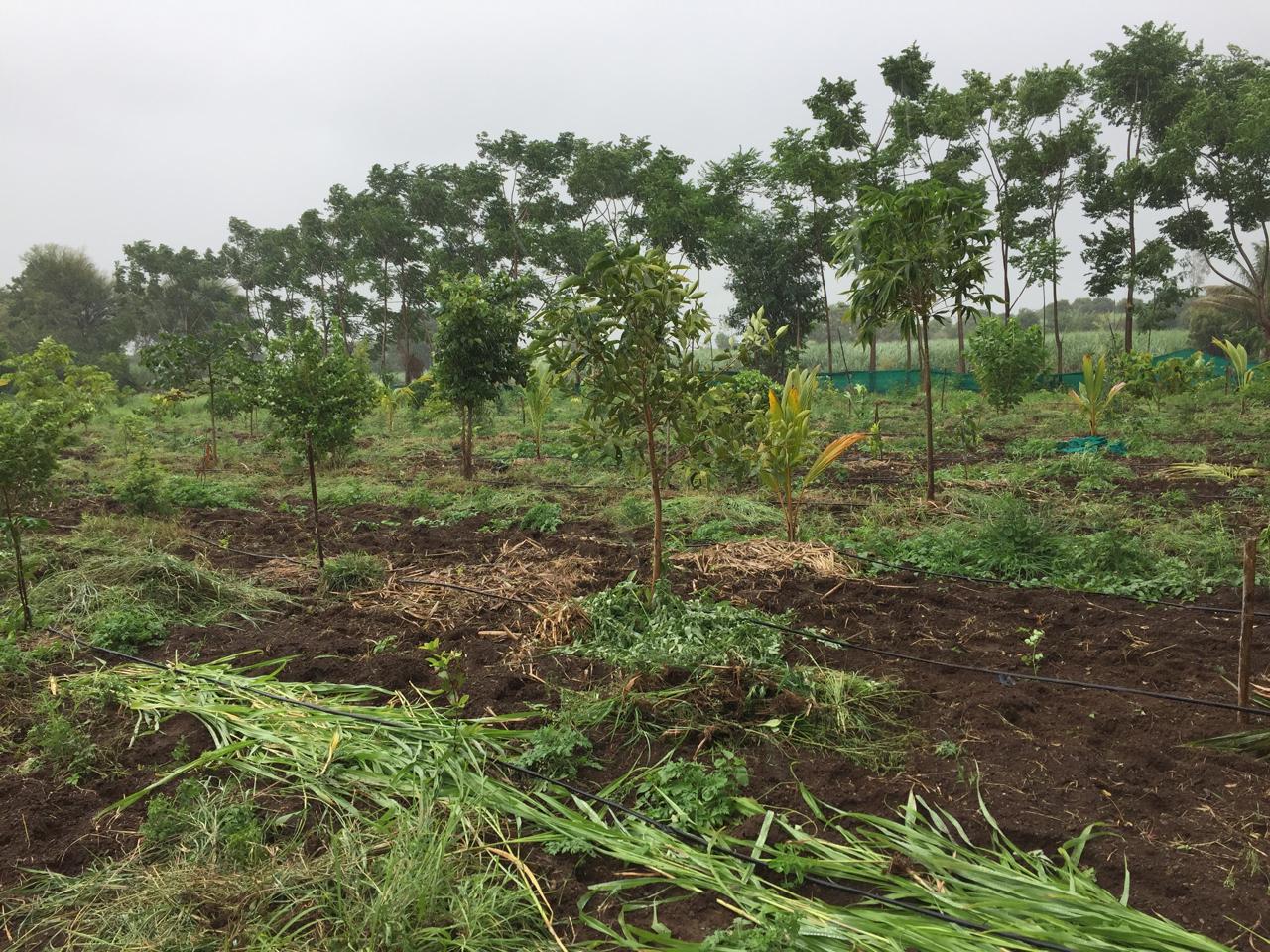
It also depends on the soil. Moringa grown in living, biologically active soil absorbs minerals in the same way any plant does, through the mycorrhizal fungal networks and microbial communities that transfer minerals from soil to root to leaf. Moringa grown in depleted soil absorbs less. It tests as moringa. It is not the same moringa.
This is why the farming philosophy behind a moringa powder matters as much as the moringa itself. The leaf is only as good as the ground it came from and the care taken to preserve what the ground built.
A teaspoon a day
The practical question is simple. How do you add it.
A teaspoon of moringa powder in warm water in the morning. Stirred into a smoothie. Mixed into a dal or a soup at the end of cooking. Added to a roti dough. The flavour is mild, slightly earthy, green. It does not overwhelm. It fits.
One teaspoon a day, consistently, over weeks and months, begins to address the quiet deficiencies most people do not know they are carrying. Not as a cure. Not as a supplement. As food, doing what food was always supposed to do.
Your grandmother did not read nutrition labels. She just knew good food. She probably knew moringa too, by the name drumstick, saijan, murungai. She knew what it did, even if she could not name the polyphenols.
Somewhere along the way we forgot to ask her.
The simplest thing you are not doing
You are probably eating enough.
You are probably not eating enough of the right things. Not because of any fault or negligence, but because the modern food system has quietly moved nutrition to the margins in favour of calories, convenience, and shelf life.
The micronutrients your body is asking for are not in a pill. They are, and have always been, in plants. Grown well, in living soil, harvested and dried carefully, given to you without processing them into something unrecognisable.
Moringa is one leaf. One remarkable, ancient, deeply researched leaf.
Add it to your morning. Give it a month. Then pay attention to what your body says.
Food that tells the truth does not need a lengthy argument.
It just needs to be grown honestly and eaten.
Zakoji Moringa Powder is slowly dehydrated at low temperatures from leaves grown in our food forest and sourced from farmers who share our philosophy. No additives. No fillers. Just the leaf.